Designing Trustworthy AI-Powered Medical Records — From Research to Enterprise Partnership
Care Studio
The Challenge
The research team built an AI model predicting patient death risk, but clinicians couldn't trust it in high-stakes environments.
My Role
Founding Designer, 3 years. Designed Care Studio V0 from the ground up.
Impact
Landed major healthcare partnership worth hundreds of millions. Enabled faster, trusted clinical decisions in the ICU.
The Gap Between AI Research and Clinical Trust
Dashboard of Death
The AI predicted mortality but had no clinical utility. Medical culture demands "trust but verify"—impossible with black-box AI.
Drowning in Data
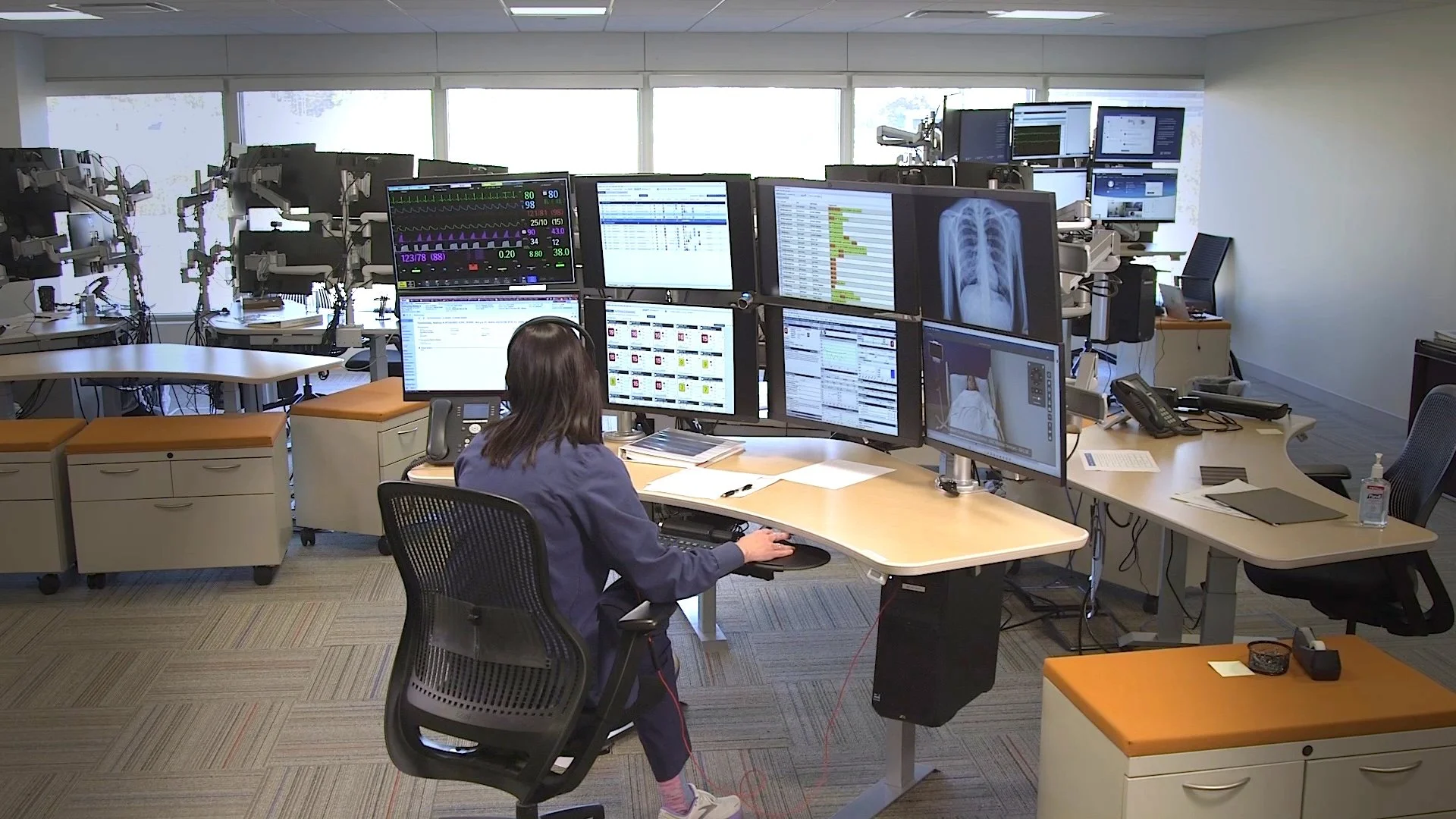
ICU clinicians scan 100+ pages of medical history in under 10 minutes—one missed allergy kills.
Immature AI and No Real Data
2017 AI wasn't accurate enough for clinical safety and we had no access to real data without first proving clinical value.
Reframed AI’s Role: From Black Box Oracle to Trusted Collaborator
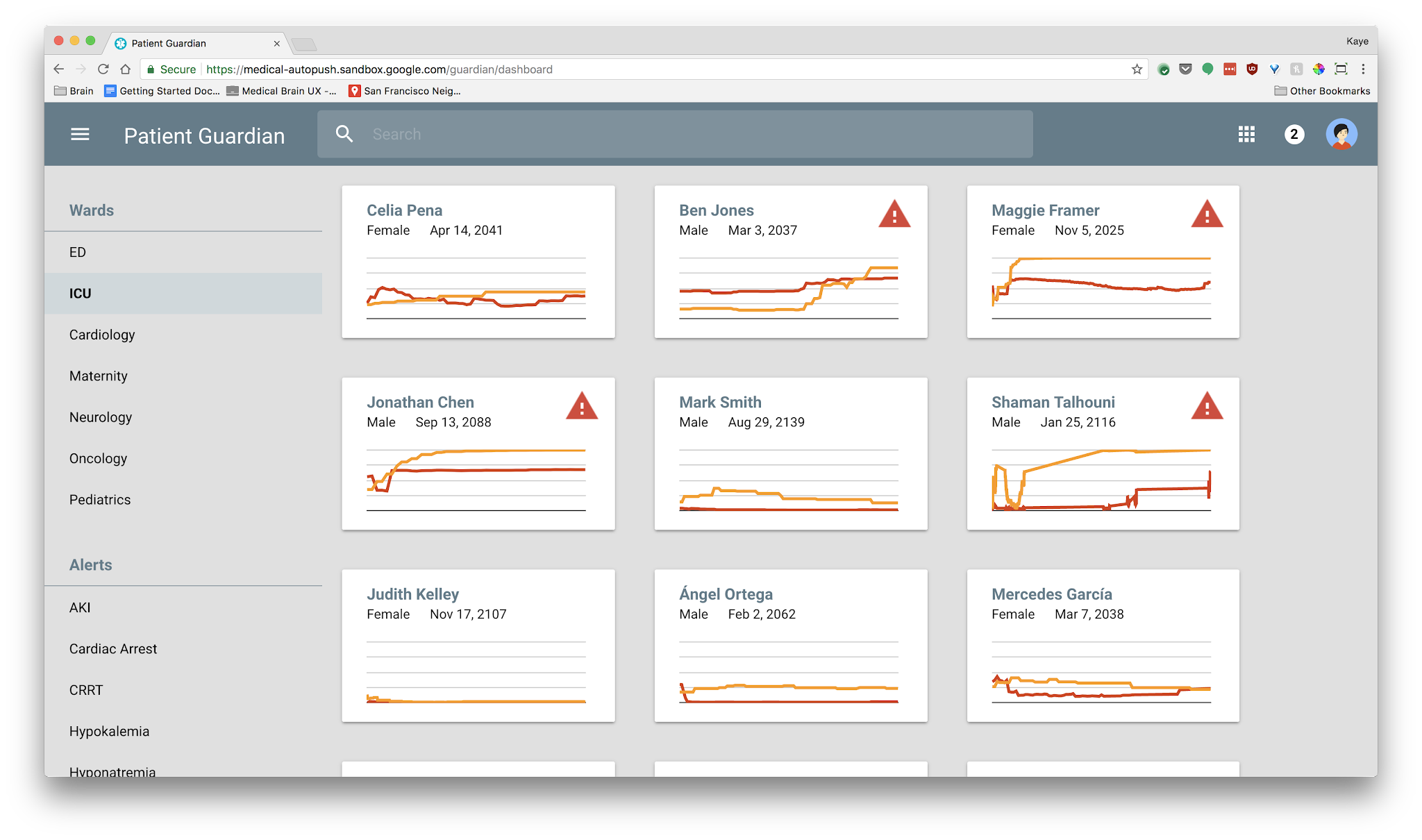
Solution in Search of a Problem
We had an AI model looking for a problem to solve. Real problem: clinicians drowning in data need signal from noise, not more predictions.
Immersed the Team in Clinical Reality via Shadowing
Realigned Around
Trust But Verify
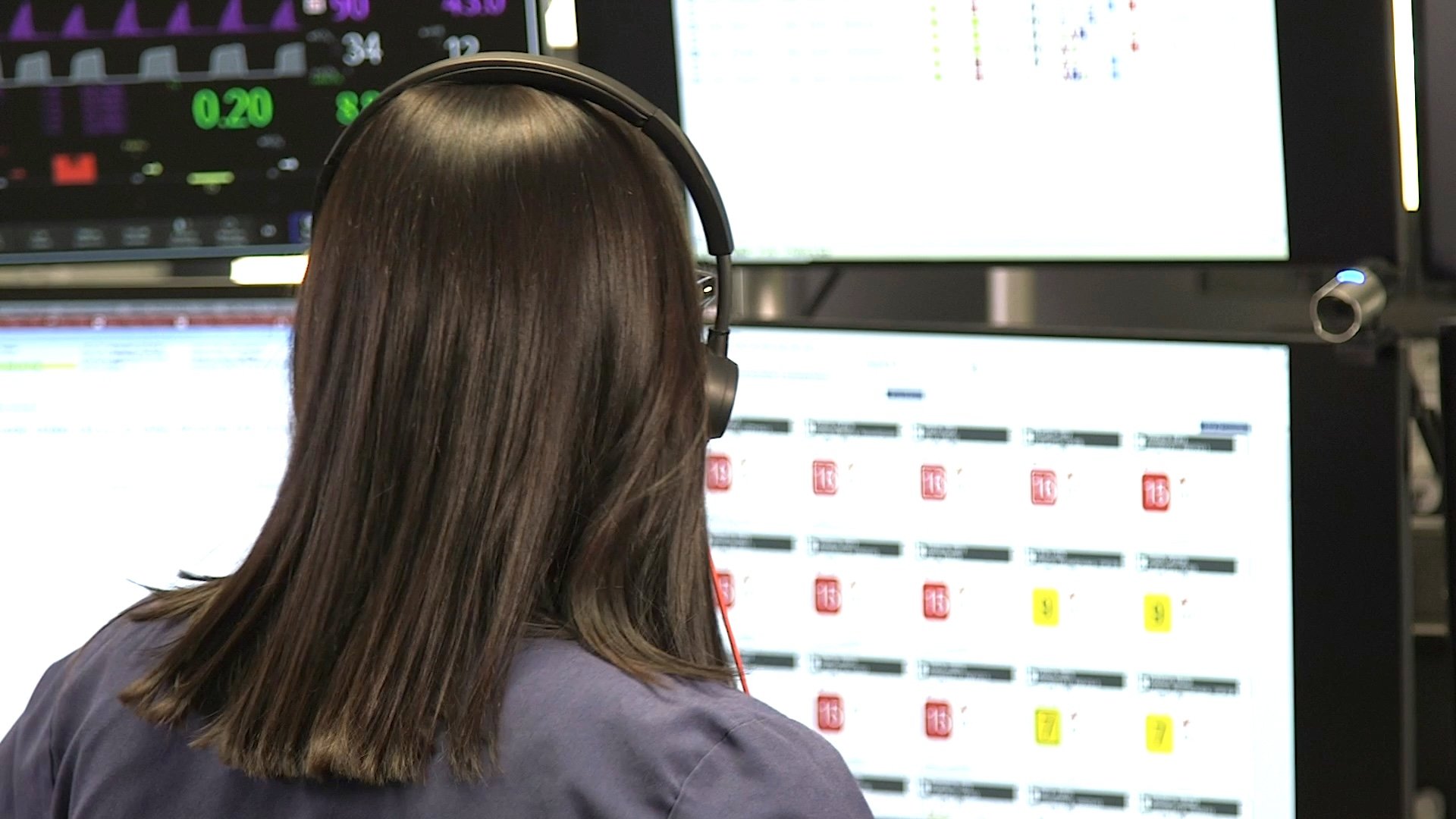
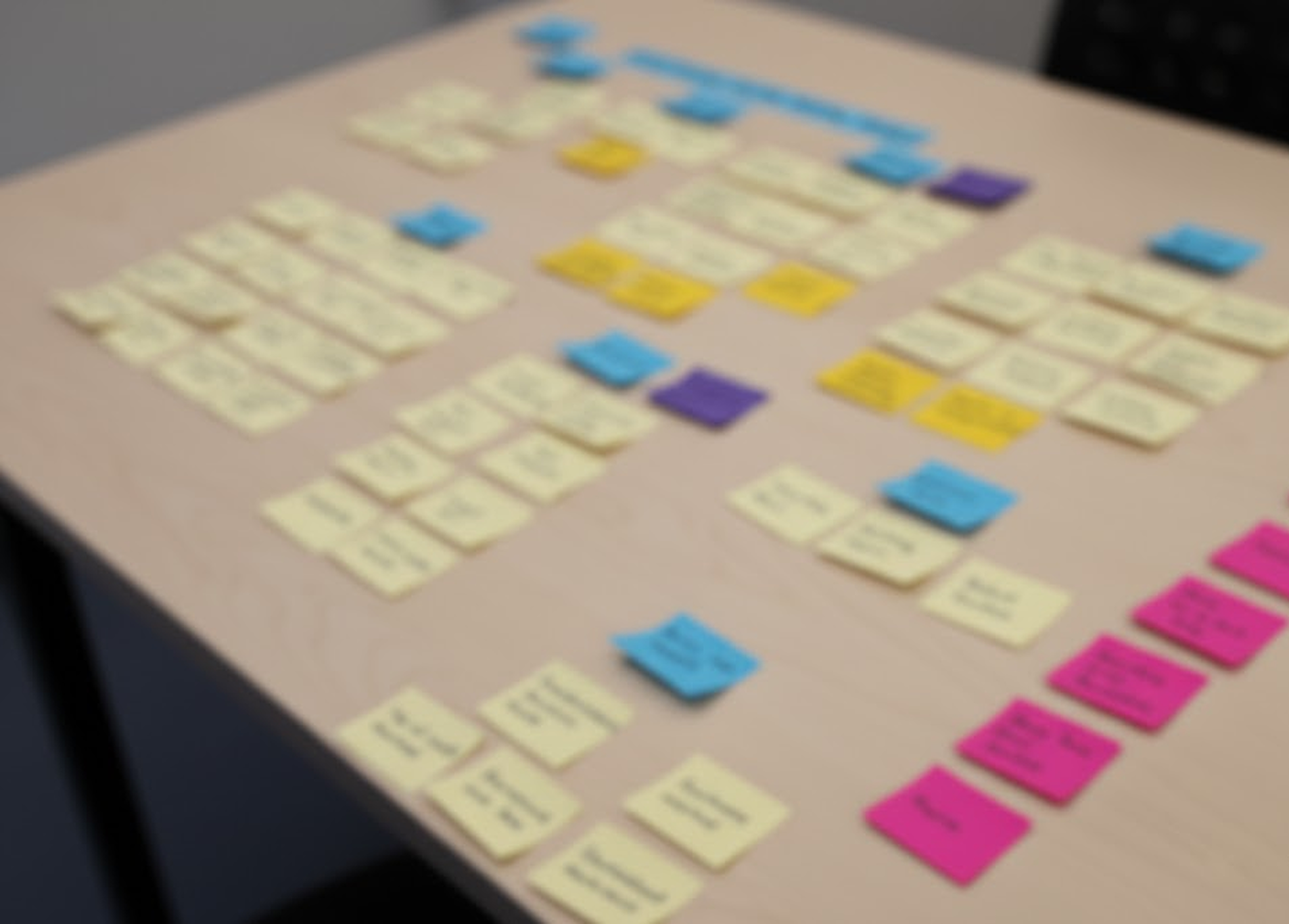
Wearing the User Research Hat
Before we had a dedicated researcher, I conducted early-stage research with our 2 in-house clinicians
CORE INSIGHT
Clinicians verify colleague recommendations due to legal accountability. AI demands even greater scrutiny so we adopted “Trust but verify” as our guiding design principle.
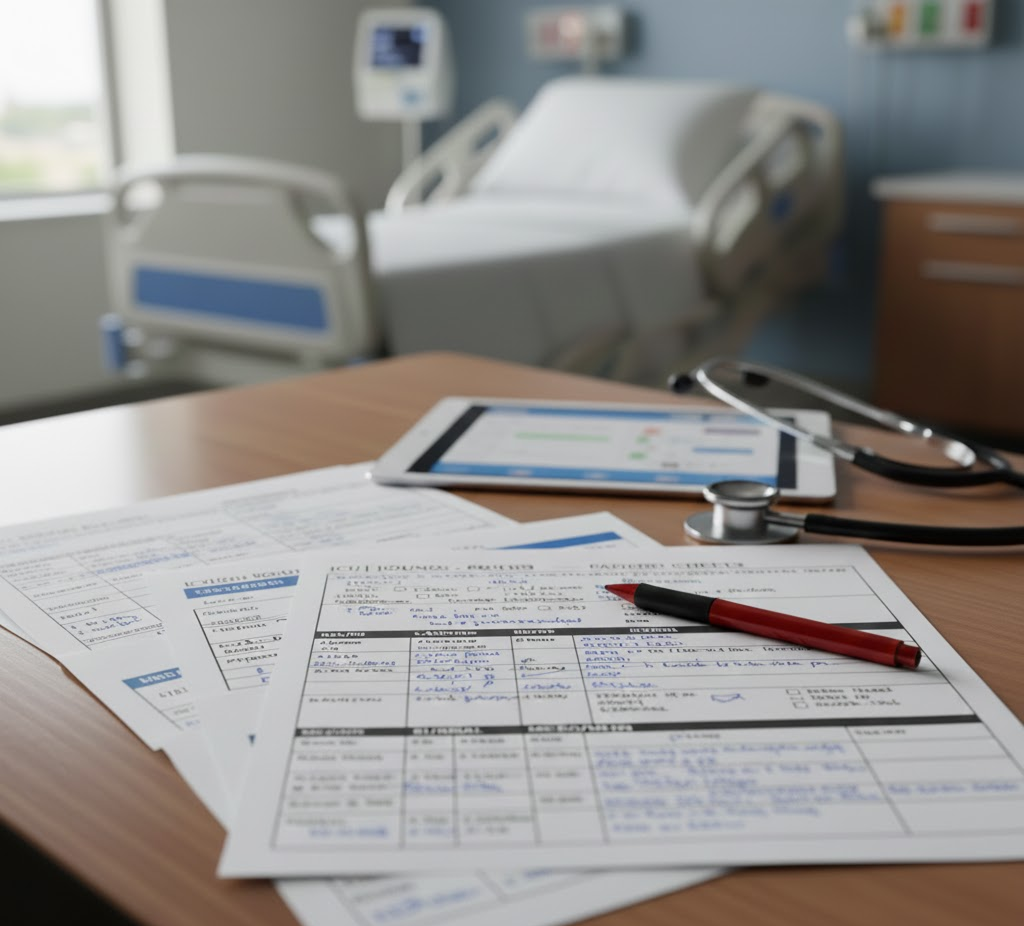
Rooted in Clinical Practice: Rounding Sheets
We needed to build without extensive user research upfront. So we anchored on rounding sheets—the paper charts clinicians already use daily as our IA foundation to ensure familiarity.
The entire team shifted from cool technology to clinical value

A Clinician-First Experience
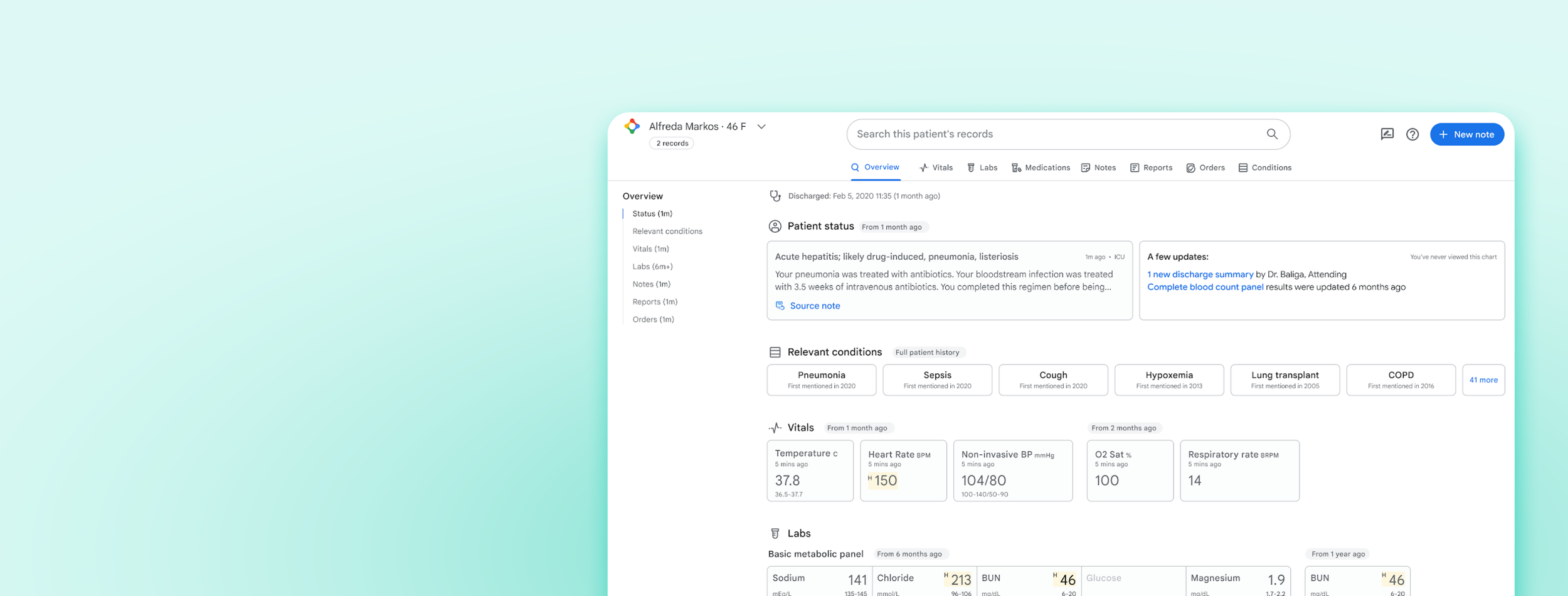
Browse: The Full Picture, Fast
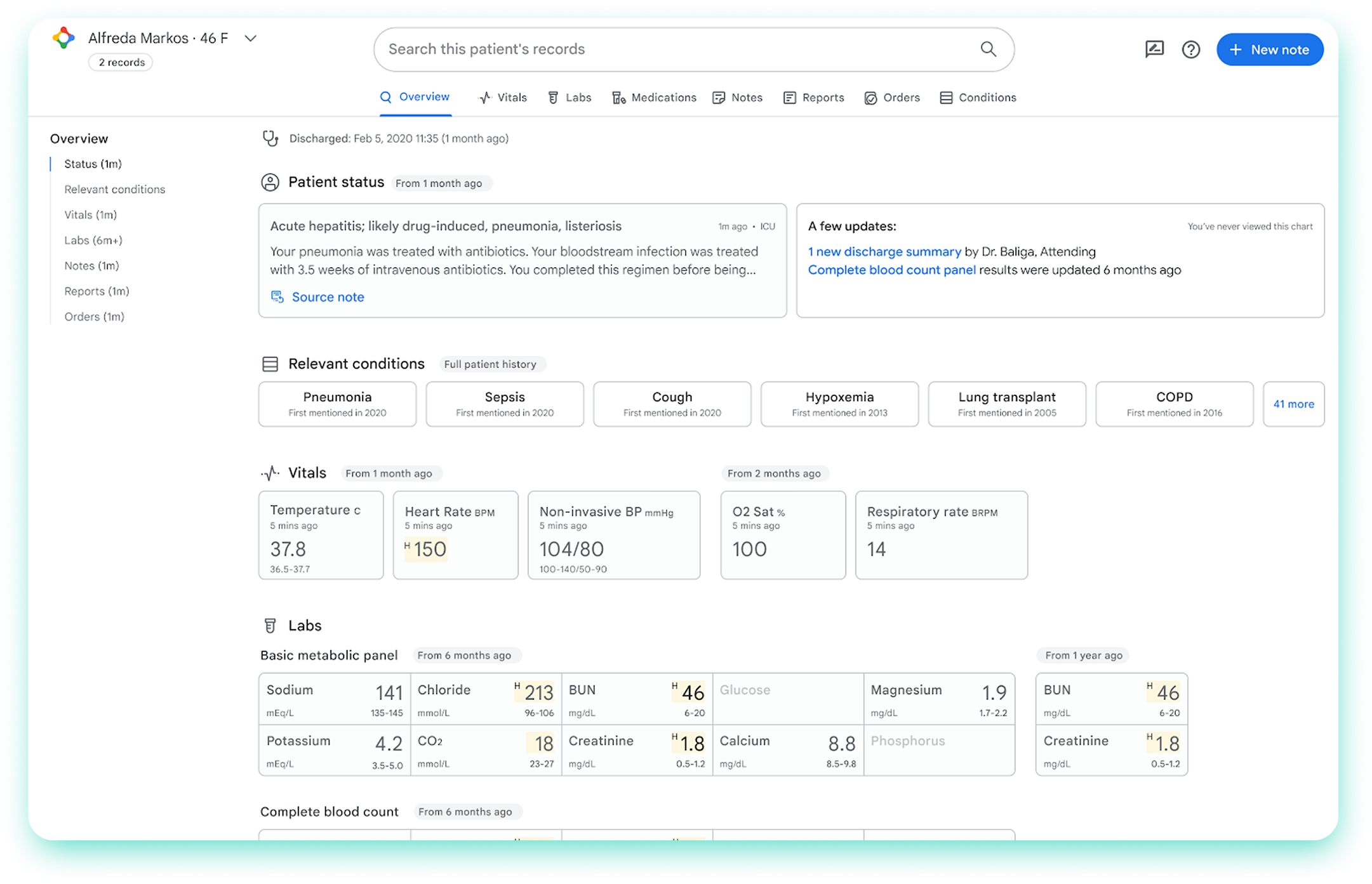
The Patient Overview: Reducing Cognitive Overload
See decades of patient history at a glance. Spot changes and abnormalities instantly. Access critical info and dive deeper when needed.
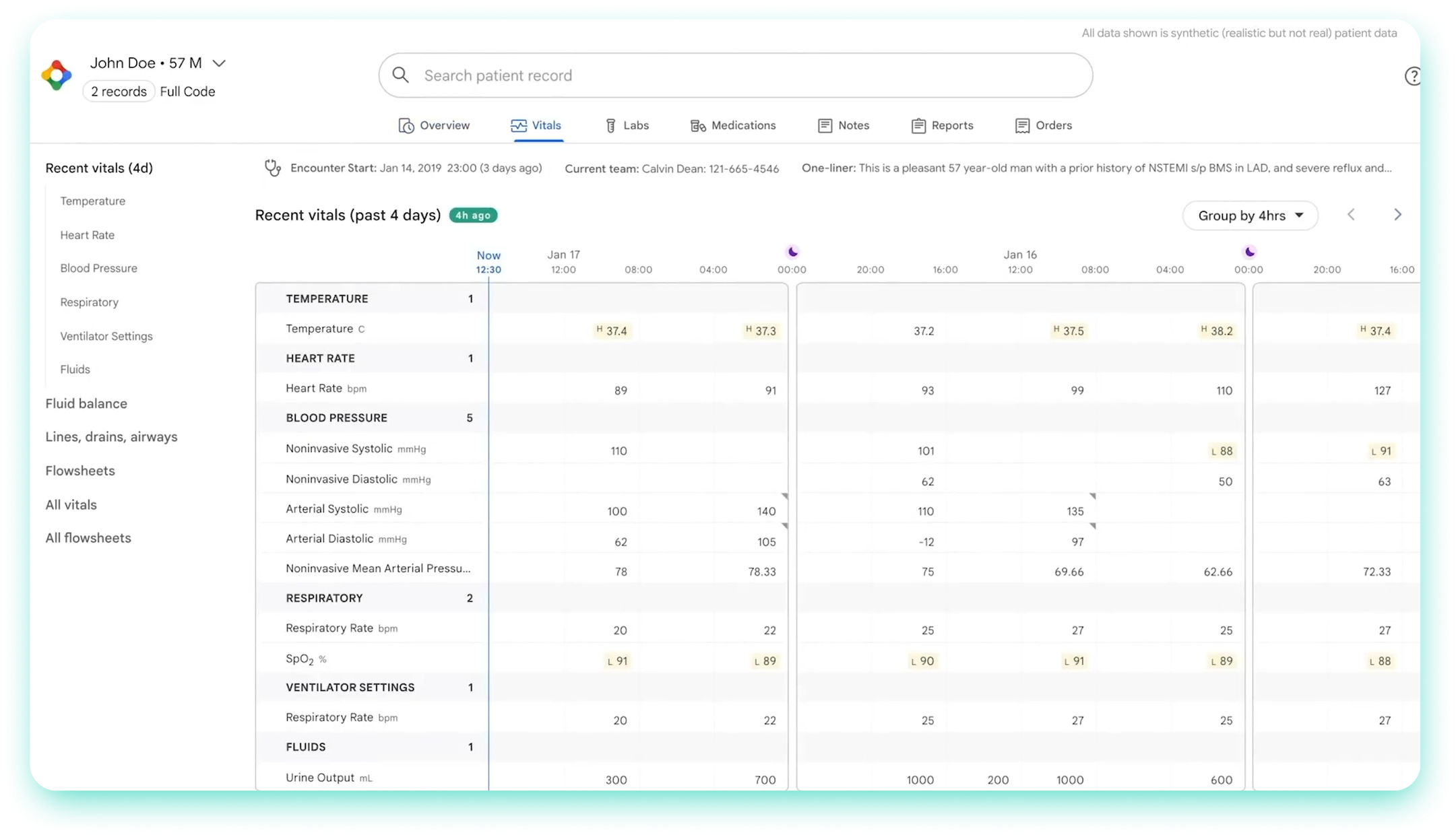
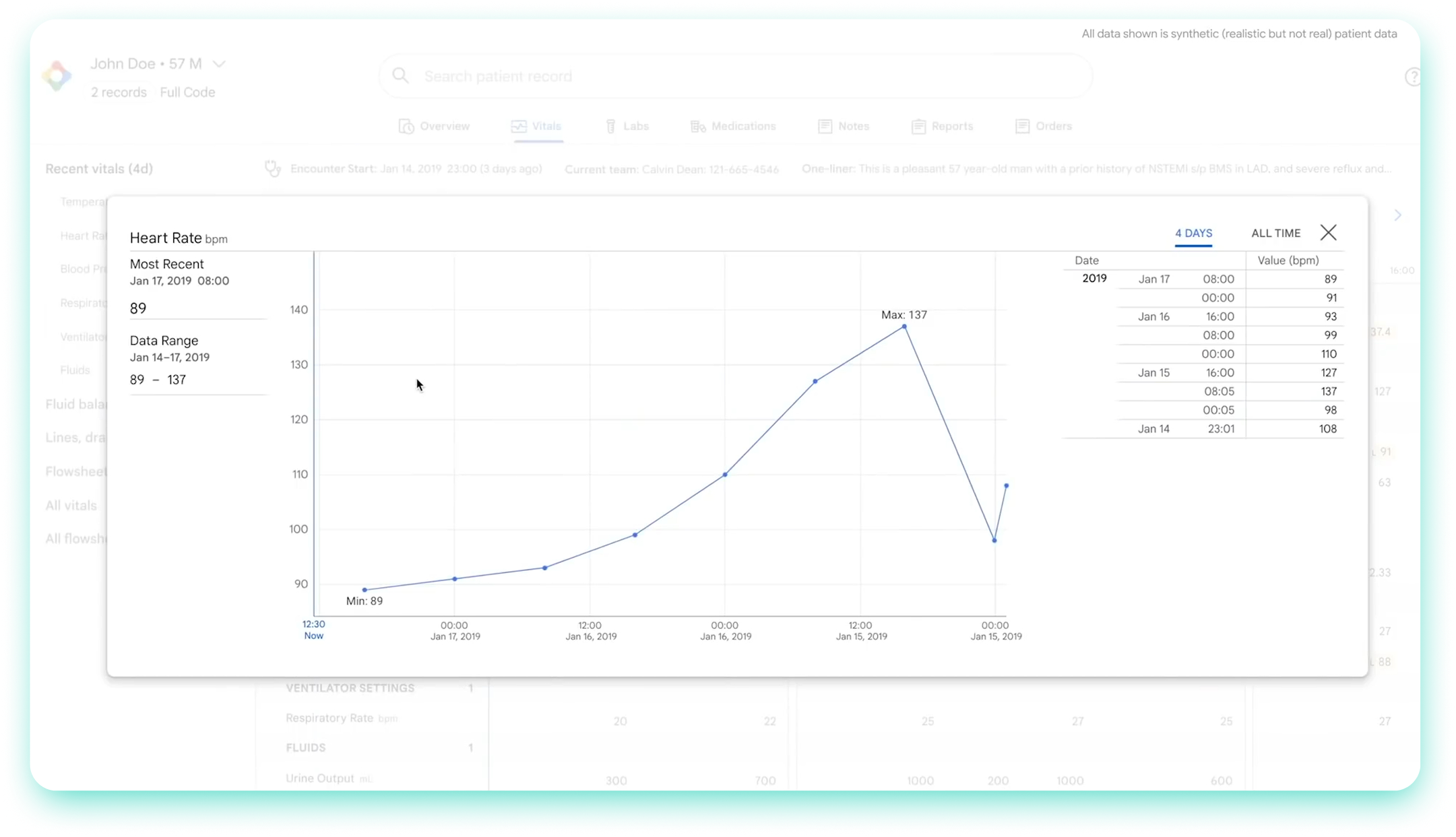
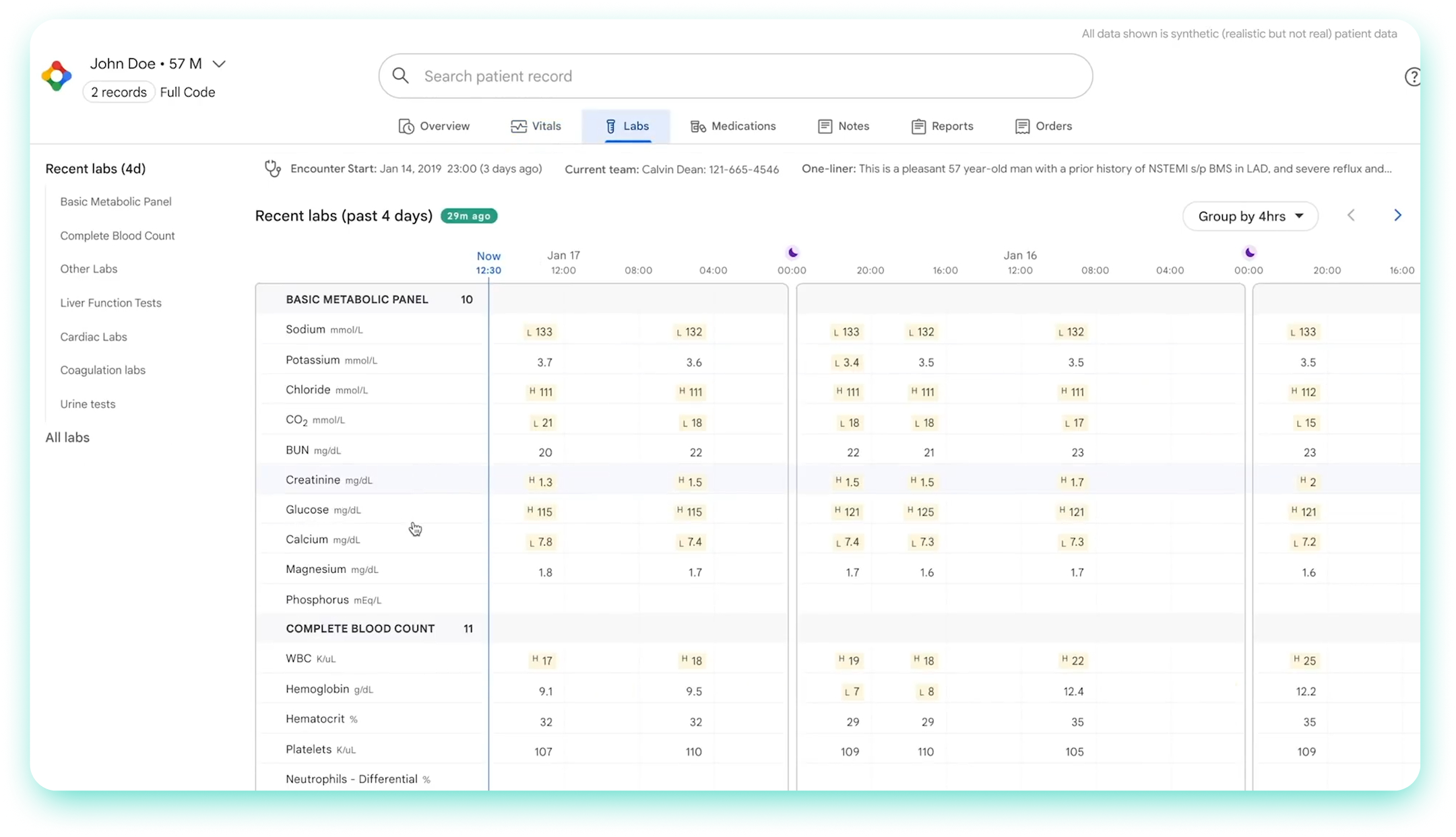
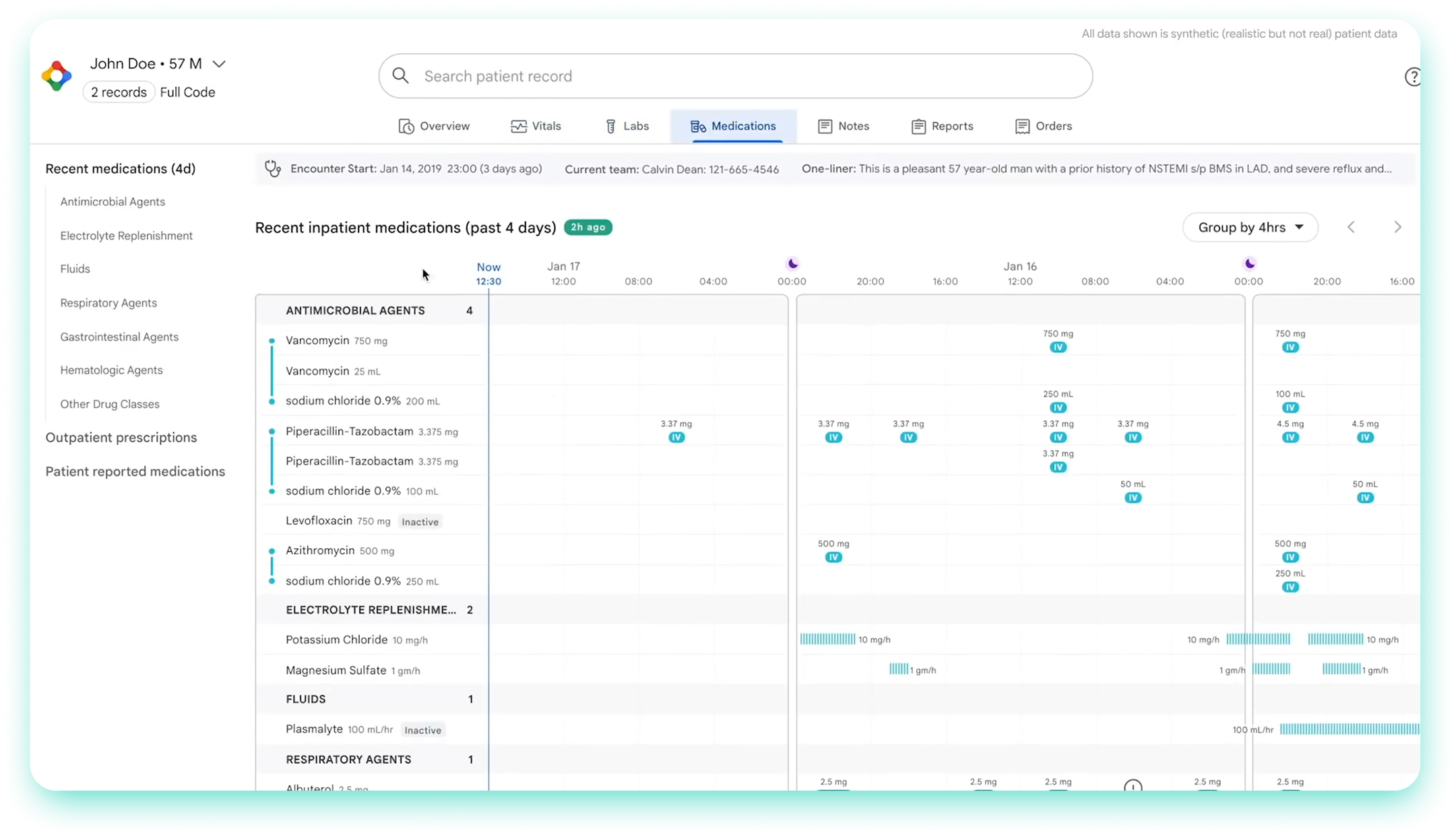
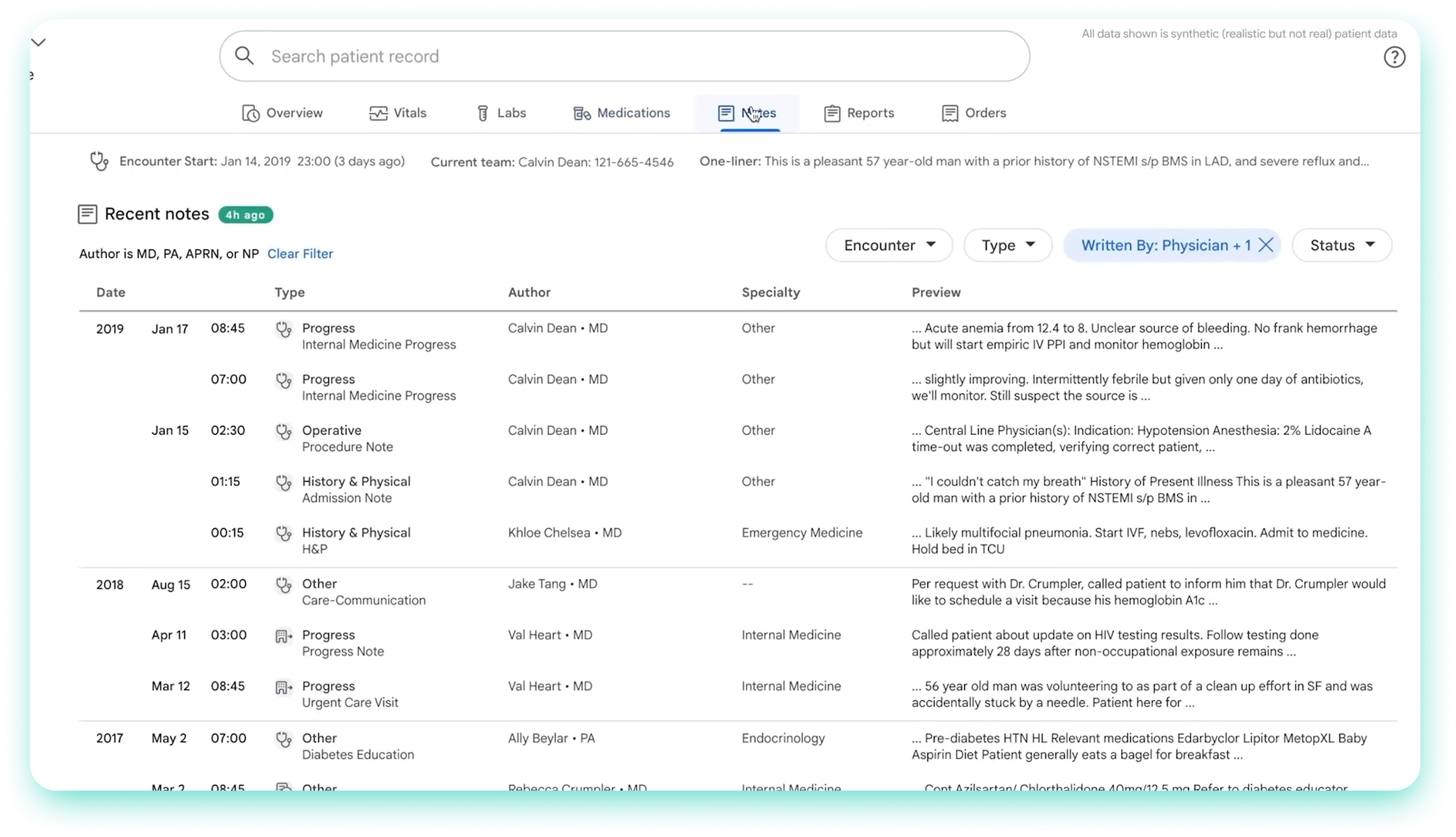
Deep Dive Tabs: Clinical Depth on Demand
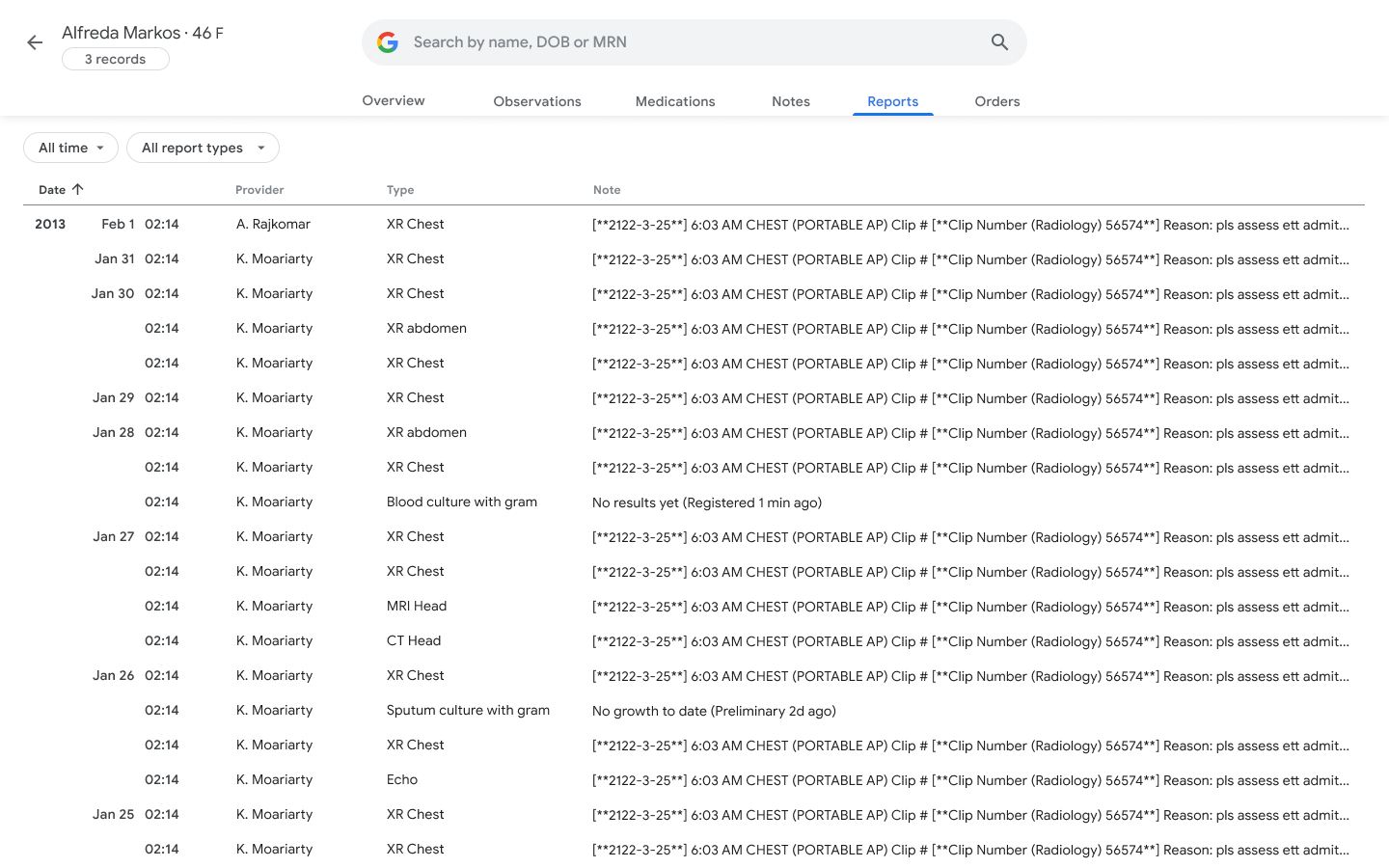
Navigate patient data that’s designed for clinical thinking. Spot patterns instantly. Track changes over time.
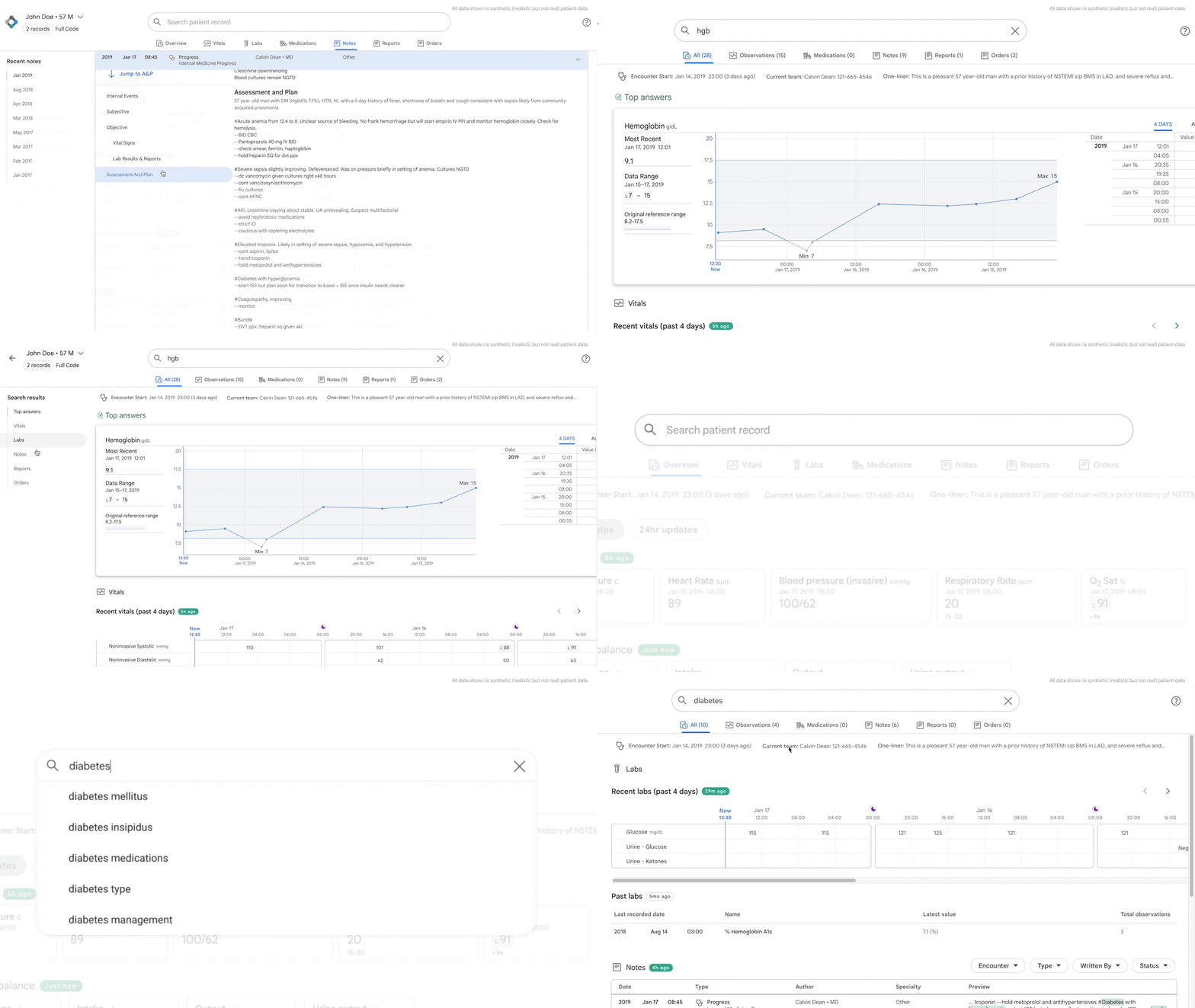
Search That Understands Medicine
Clinical Search
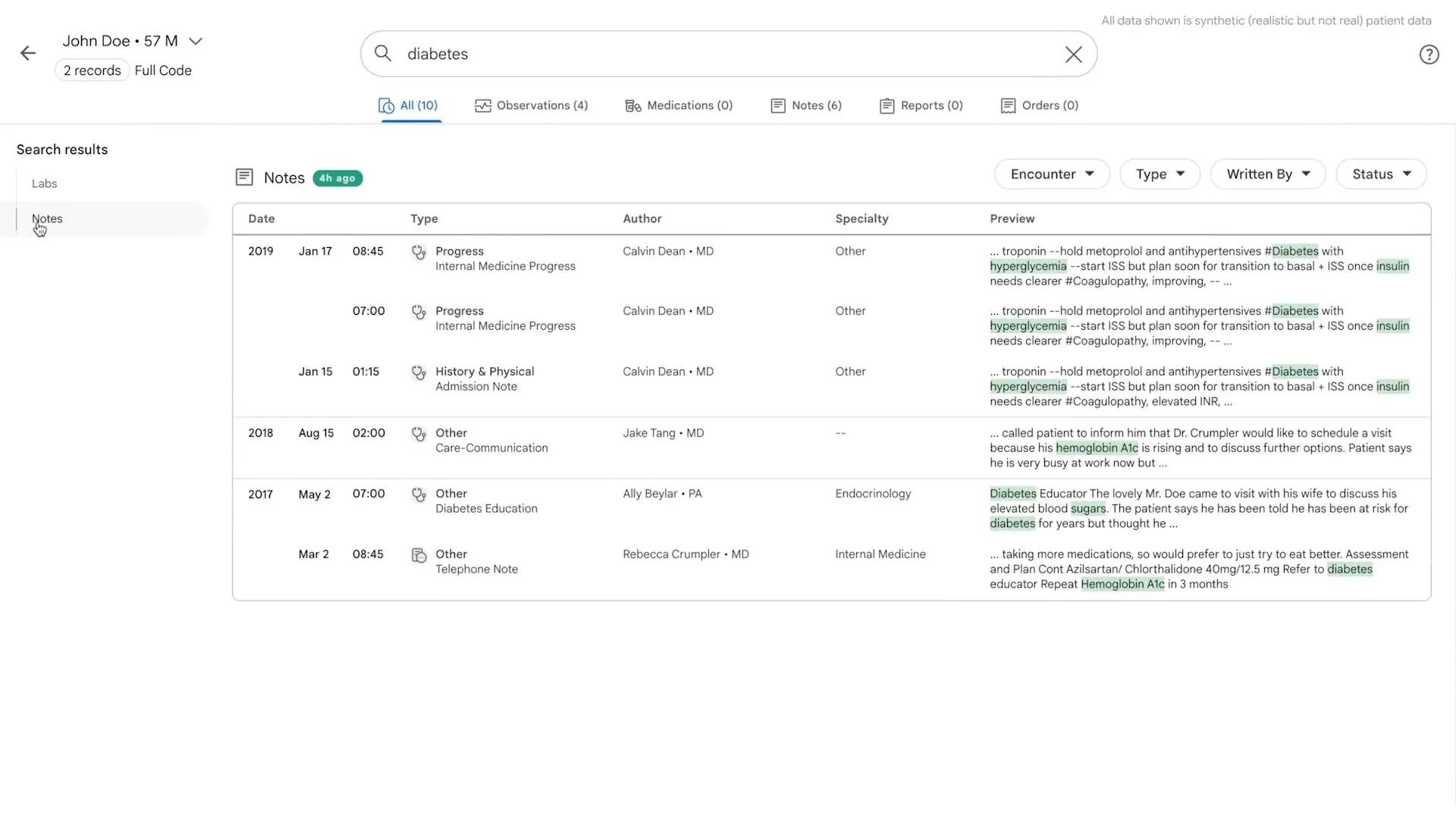
Find what you need using medical terminology and shortcuts. Clear "no data" vs. "negative results." Results ranked by clinical relevance.
“Being able to access that information with a quick search is just phenomenal.”
– Partner Clinician
Design Deep Dive
Taming the Unstructured Chaos of Clinical Notes
Notes held the truth and the noise
Information Overload
ICU patients often have decades of medical history, making it difficult to distinguish what's relevant to the current hospitalization
1
Signal Lost in Noise
Copy-pasted information across multiple notes makes it impossible to identify what's actually new or changed.
2
“What I really want is the cognitive input—what this other physician is thinking.”
– Partner Clinician
Learning from our Synthetic Data Attempt
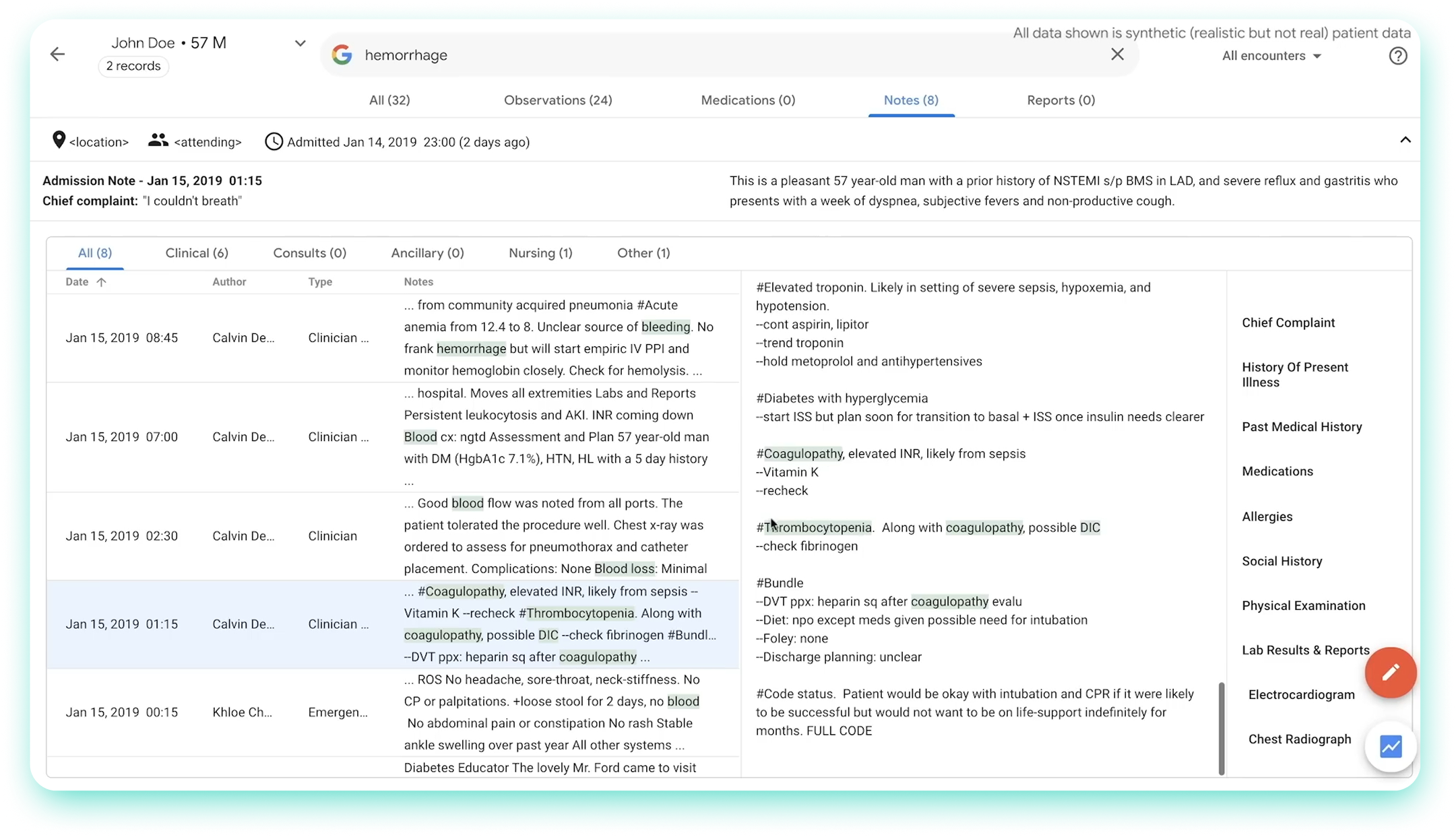
My initial design used synthetic data to secure real data access. Once we got real patient data, the design broke
Key metadata truncated
Inconsistent behavior across entry points
Couldn't scale to new data types
DESIGN CHALLENGE
How might we help clinicians navigate notes—from familiar patients to first encounters, from sparse records to decades of history?
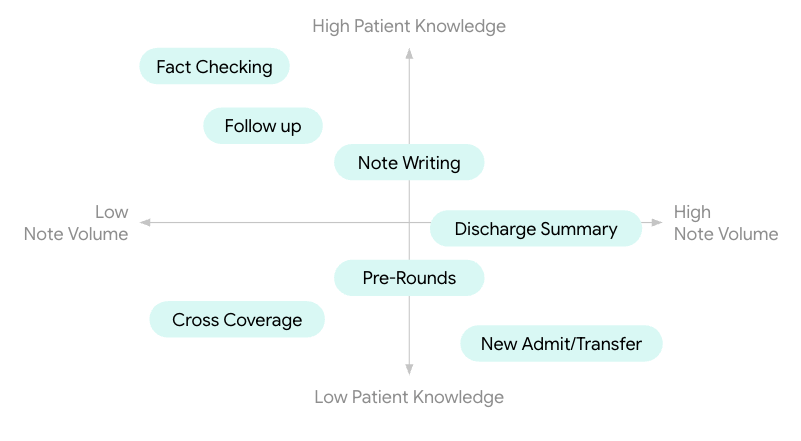

Structuring the Unstructured
Effortless Navigation to What Matters
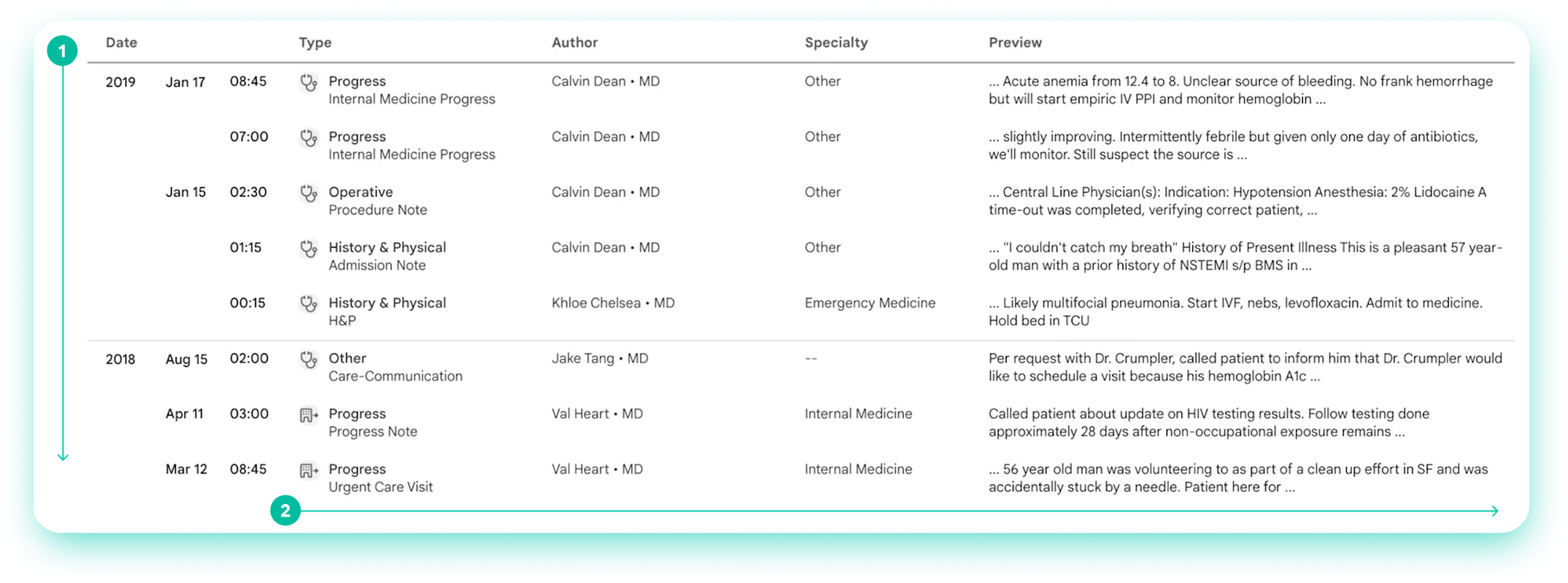
1. Time as an Anchor
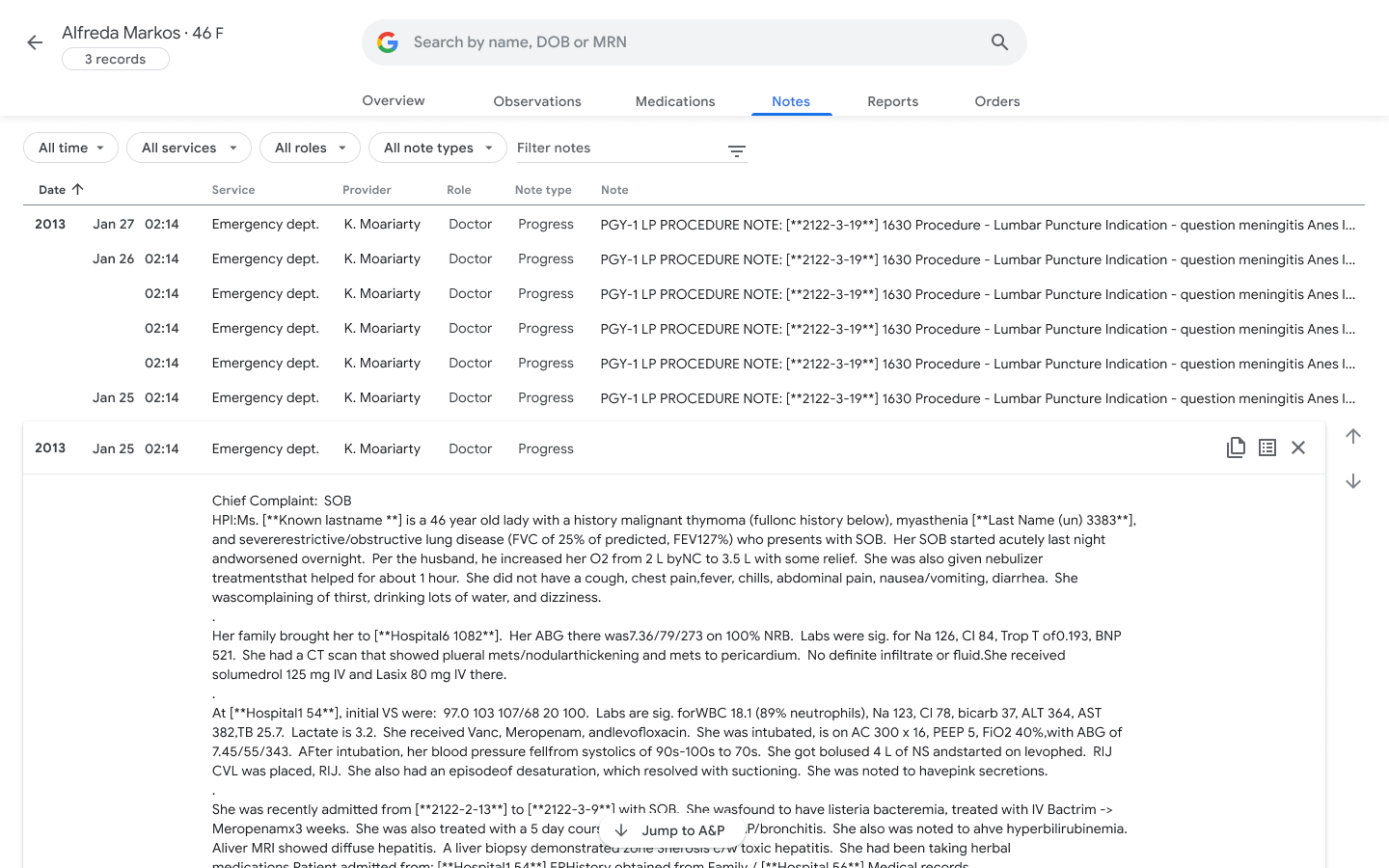
Clinicians orient first by time so notes are chunked by year for chronological scanning, with ability to narrow as needed
2. Metadata for Credibility Assessment
Display key signals (provider role, note type, service) to enable instant credibility and relevance evaluation.
More Signal, Less Noise
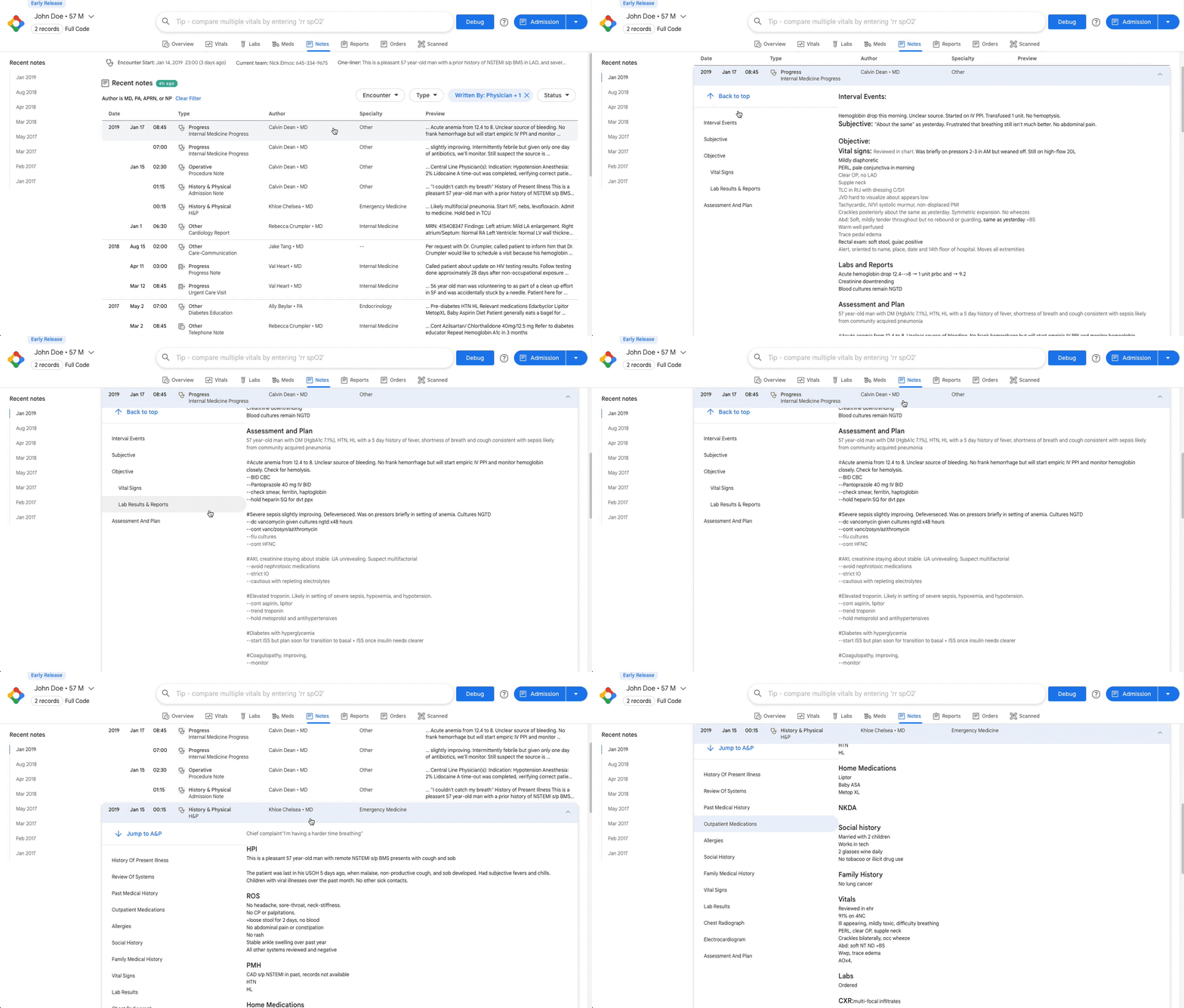
Inline Expansion: Maintain Context
Notes open inline so clinicians don’t lose their place in the list—critical when scanning multiple notes to understand patient trajectory over time.
Auto-Generated Outlines: Jump to What Matters
Relevant sections vary by clinical question. Quick-jump to any section—plus priority jump to Assessment & Plan, the most critical section.
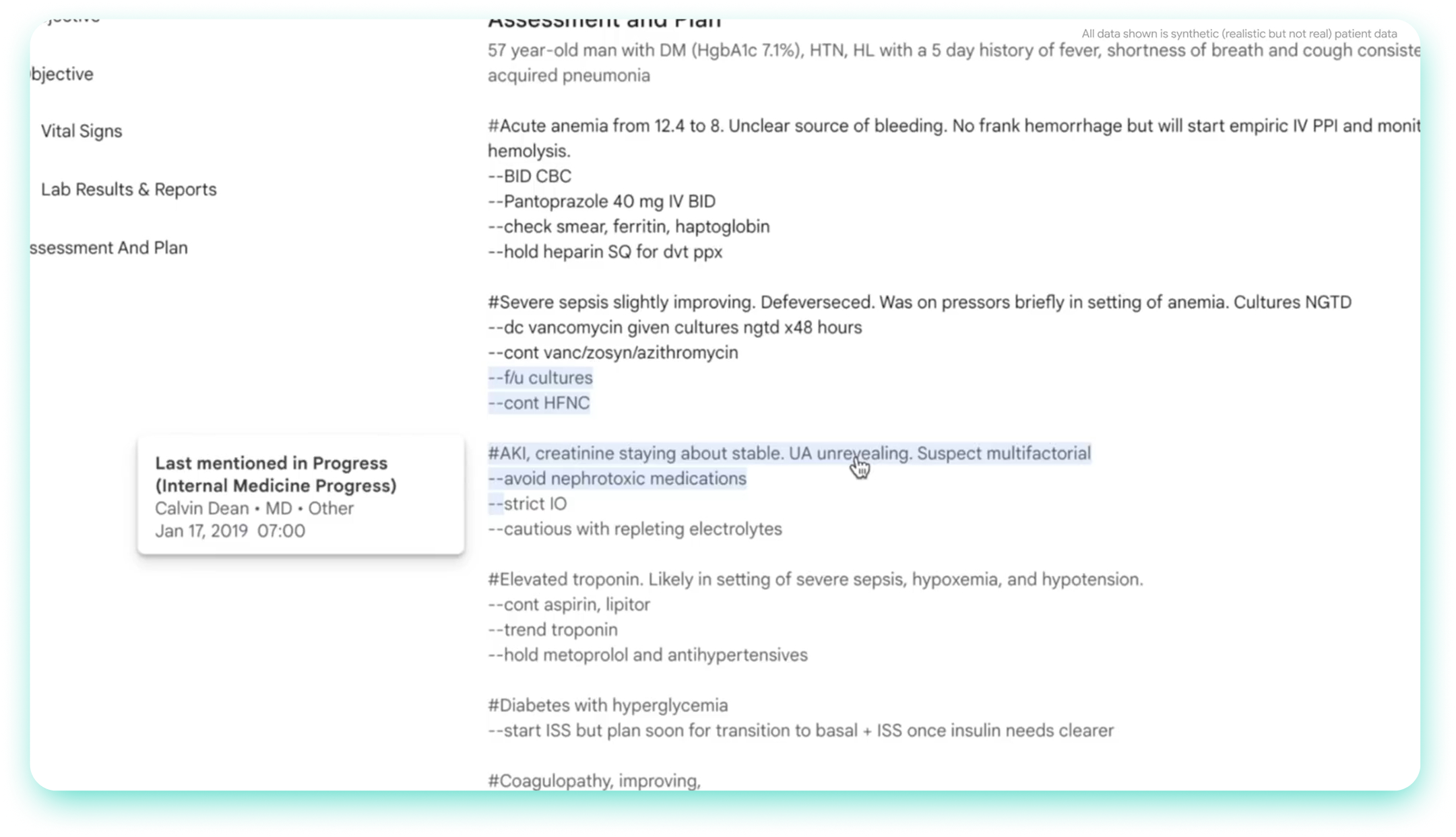
Smart De-duplication: Highlight What's New
Copy-paste obscures new information. De-emphasize duplicated text, show source on hover—spot fresh thinking instantly, verify when needed.
Iterative Threshold Refinement
Refined copy-paste detection with ML engineers through real note testing. Edge cases drove iterative improvements to detection and visual design.
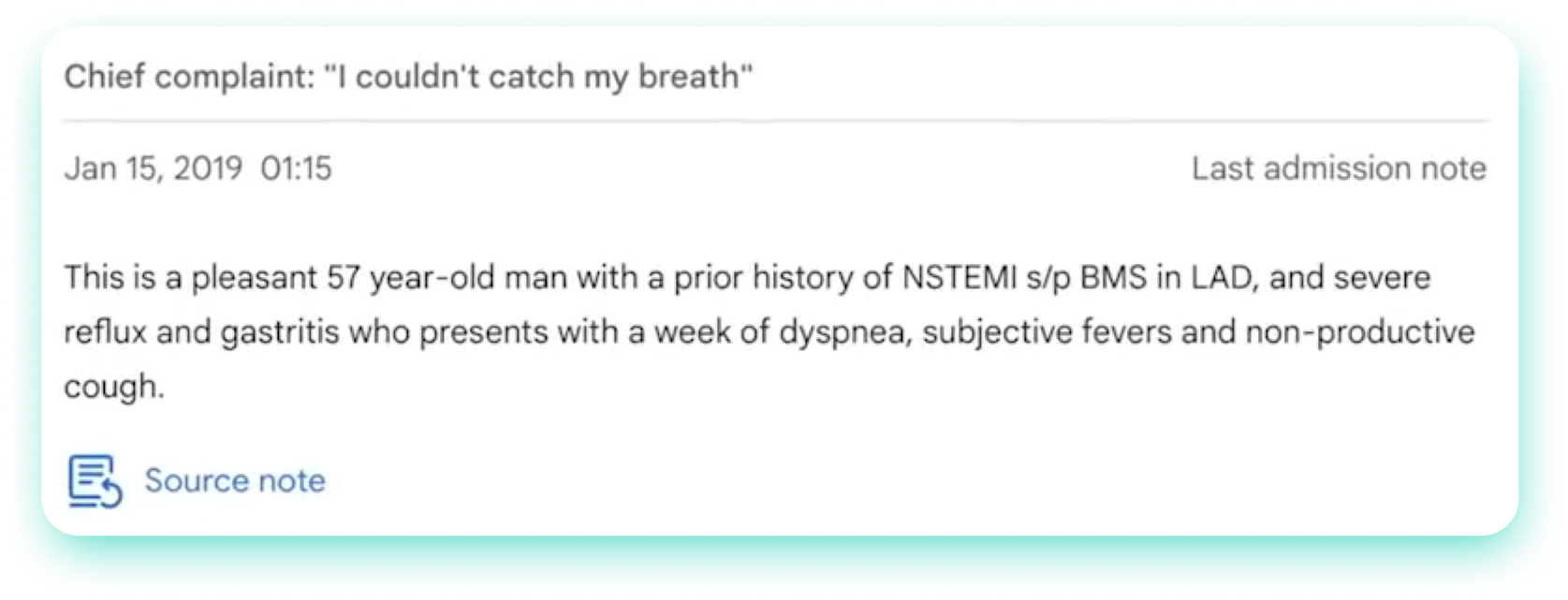
Enabled Problem Summary: Reliable Clinical Signal
Surfaces key events and symptom progression—enabling clinicians to grasp patient trajectory instantly without digging through scattered documentation.
Designing Around Model Limitations
Unreliable AI summarization (70-80%). Pivoted to extraction from trusted sources with citation. Achieved 95%+ accuracy by designing around model constraints.
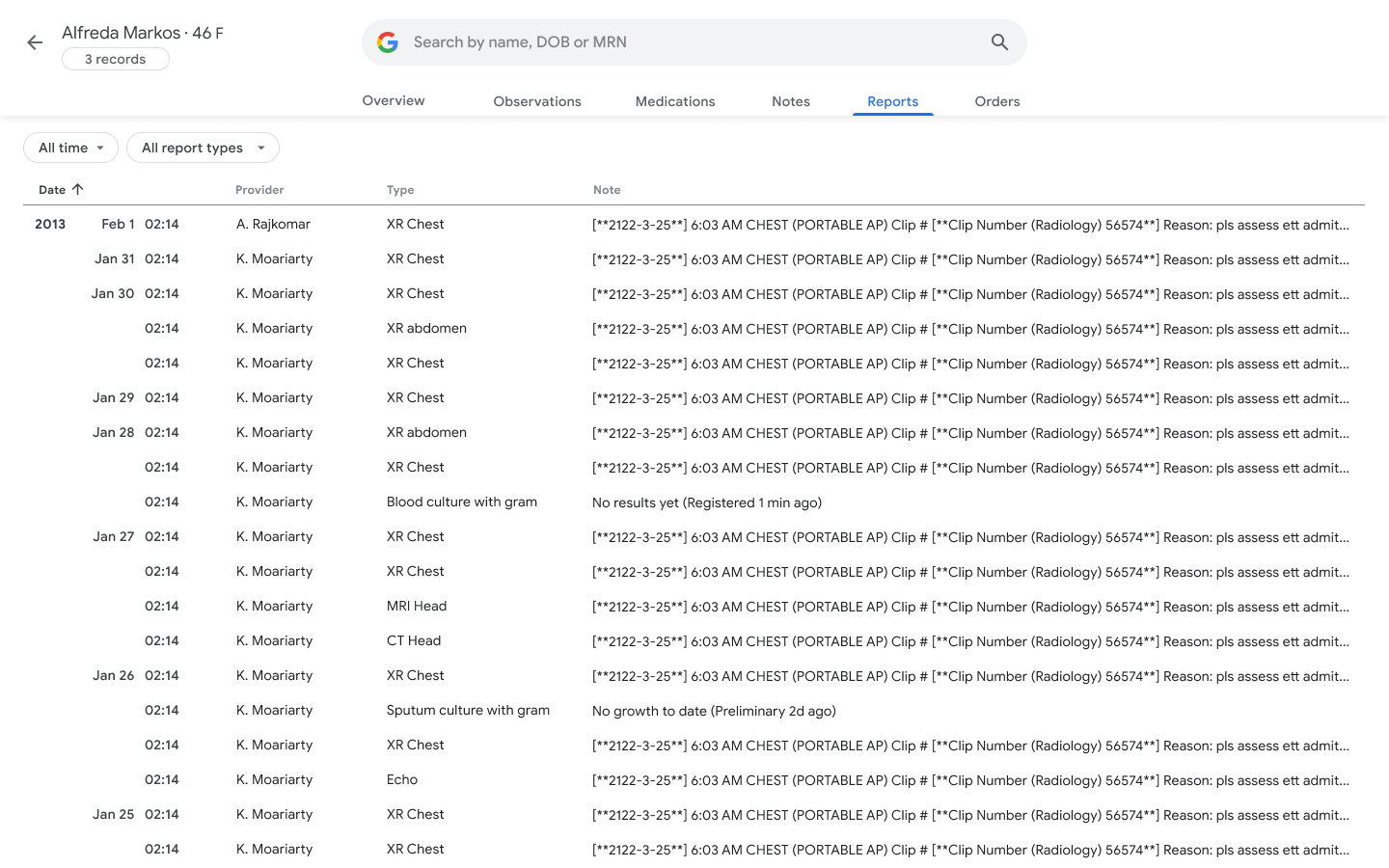
A Framework that Scaled
Scaled across 3 data types and 7+ entry points—supporting familiar patients with sparse notes to first encounters with decades of history.
From Data Overload to Clinical Clarity
“You demoed the future of the EHR. If we had it, it would be game over.”
– Major Electronic Health Record CEO
Business Results
Secured major healthcare partnership worth hundreds of millions
Demonstrated sufficient impact to scale team 6x—from 18 to 120 people
Proved Google could deliver AI value in high-stakes domain, not just publish research
Product & User Outcomes
Transformed a research experiment into an enterprise product customers would pay for
Moved ICU clinicians from fragmented data hunting to trusted, rapid clinical decisions
Customer Validation
"The innovation of [Care Studio] is one of the key reasons we chose Google Cloud." — Hospital Executive
"Being able to access that information with a quick search is just phenomenal." — Doctor
Clinicians raved that it "made their lives easier and made treating patients easier"